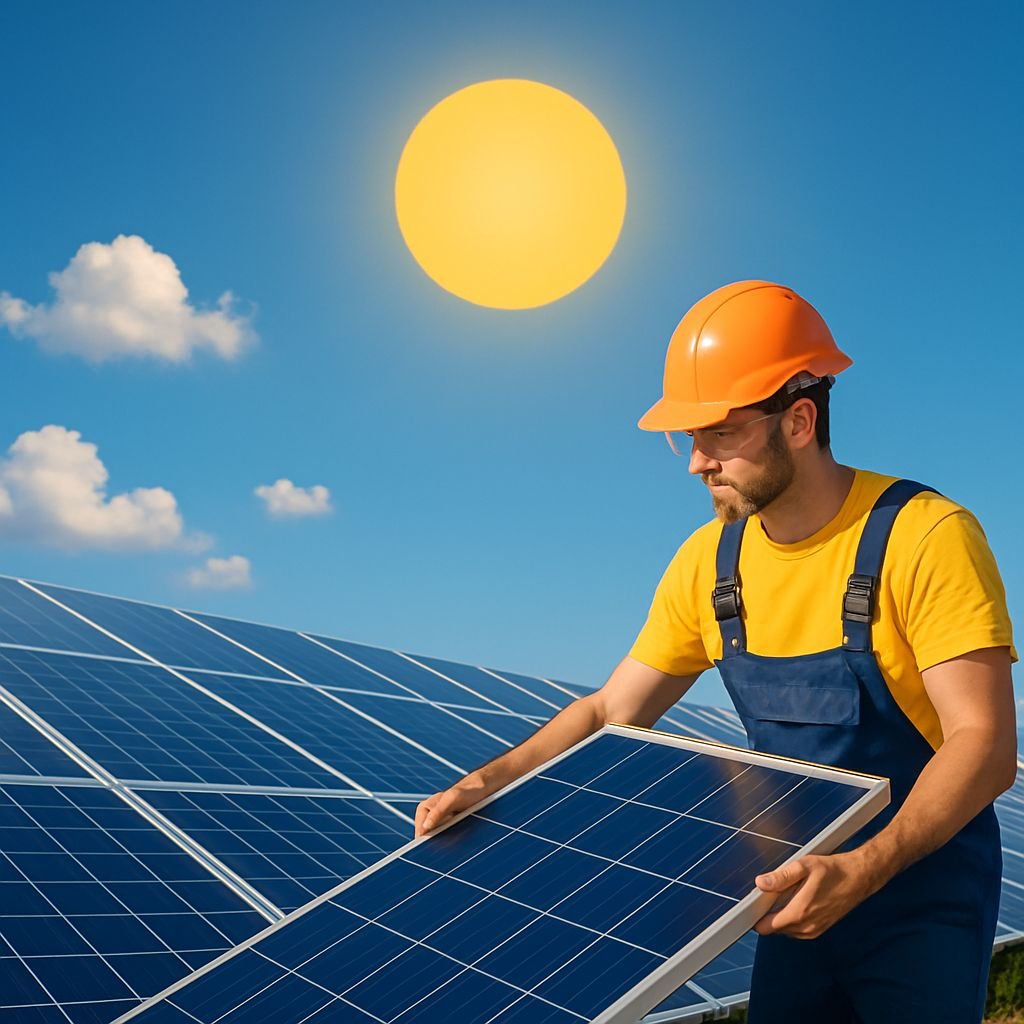
Overview of Solar Panel Lifespan
- The Jackery SolarSaga 200W Solar Panel is constructed with an ETFE-laminated case and monocrystalline solar cells, which have a conversion efficiency rating of up to 25%. However, the only way to maintain this efficiency over time is to take proper care of your panel.
- Simple habits like setting the panel at the correct angle, regularly cleaning the surface, and properly storing the cable can add years to the life of your panel.
- While the IP68 waterproofing does provide protection against the elements, it is not a substitute for regular maintenance. There are limitations that most owners are not aware of.
- One of the most common causes of long-term efficiency loss is pairing your SolarSaga 200W with a power station that is not compatible.
- Keep reading to find out what storage mistake is more damaging to bifacial cell layers than any weather conditions.
The lifespan of your solar panel is largely up to you, and many people are unknowingly reducing it.
The Jackery SolarSaga 200W solar panel is built to last. It comes with a bifacial monocrystalline cell design, a honeycomb light trapping surface, an ETFE-laminated case, and an IP68 waterproof rating. These features help to ensure the panel is highly durable. However, even the best engineering can’t protect against improper handling, storage, and usage. Tacoma Beast, a reputable seller of outdoor power equipment including the full Jackery SolarSaga range, has provided this guide to help you maximize the lifespan of your solar panels.
The following 10 tips are specifically tailored to the SolarSaga 200W’s unique design and components — they’re not just generic solar advice. Each tip directly relates to a specific component or design feature of the panel.
These Easy Tips Can Extend the Life of Your Jackery SolarSaga 200W Solar Panel
It’s not usually one big event that causes a solar panel to degrade. Instead, it’s a series of small mistakes that add up over time. If you’re not careful, a panel that should last over a decade can start underperforming much sooner. The good news is that there are simple solutions once you know what to avoid.
What the ETFE-Laminated Case Already Does for You
ETFE, which stands for ethylene tetrafluoroethylene, is a material that is considerably more durable than the standard PET plastic used in lower-end panels. The ETFE laminate on the Jackery SolarSaga 200W acts as the outermost protective layer over the monocrystalline cells. This material is resistant to UV degradation, repels moisture, handles temperature fluctuations better than PET, and maintains optical clarity over time. This means that more sunlight can reach the cells, rather than being absorbed or scattered by a cloudy, aged surface. The downside is that ETFE is not invincible. It can be scratched by abrasive materials, and once the surface clarity is compromised, the efficiency will noticeably decrease.
Don’t Let the IP68 Waterproofing Make You Complacent
IP68 is the highest level of protection against dust and water. For the SolarSaga 200W, this means that the panel can handle dust and temporary immersion in water under certain tested conditions. But it doesn’t mean that the panel can handle prolonged exposure to moisture, salt air, or standing water near the connector ports. The IP68 rating applies to the panel enclosure, not the cable connectors, the DC ports, or the junction box if the seals break down over time. Think of the waterproofing as a safety net, not a maintenance plan.
1. Always Position the Panel Correctly
Positioning the panel at the correct angle isn’t just about maximizing power output for the day — it’s also about minimizing the thermal stress that can wear down your cells over years of use. When a panel absorbs sunlight at a suboptimal angle, it has to work harder thermally to produce less electricity, which speeds up cell wear over time.
Utilizing the Adjustable Stands to Get the Best Sun Position
The Jackery SolarSaga 200W is equipped with built-in adjustable kickstands that are specifically designed to allow you to position the panel in the direction of the sun. Make sure to use them every time. As a general guideline, if you are in the northern hemisphere, your panel should face true south, and if you are in the southern hemisphere, it should face true north. The tilt angle should be approximately the same as your latitude — so if you are at a latitude of 35 degrees, aim for a tilt of 35 degrees. If you adjust the tilt angle seasonally, you can get even more output: make it steeper in the winter and shallower in the summer.
How Incorrect Positioning Speeds up Damage on Monocrystalline Cells
Monocrystalline cells are carefully cut silicon pieces designed to absorb direct sunlight. If the panel is flat or not facing the sun, the cells still take in heat, but they convert much less of it into electricity. This heat has to go somewhere, so over time it puts stress on the cell bonding layers and the junction points within the panel. It’s a slow process, but the damage adds up over time. Correct positioning can reduce heat buildup and increase output, which is a double win for lifespan.
Rewrite the following human content into human content:
Latitude Recommended Tilt Angle Season Adjustment 25° (e.g., South Florida) 25° ±15° seasonally 35° (e.g., Tennessee) 35° ±15° seasonally 45° (e.g., Oregon) 45° ±15° seasonally 50° (e.g., Northern Canada) 50° ±15° seasonally
2. Avoid Placing the Power Station in Direct Sunlight While Charging
This tip is not just about the panel, but about your entire solar setup. When you connect the SolarSaga 200W to a compatible Jackery power station, the power station is responsible for charge regulation and battery management. If the power station gets too hot — for example, from sitting in direct sunlight during a summer charging session — it can send irregular charge signals back through the cable connection. Over time, this inconsistent charging input can put stress on the panel’s output circuitry and connector interface. To avoid this, keep the power station in the shade while the panel is in the sun. This extra step can help extend the life of both devices.
3. Regularly Wipe Down the Panel Surface
Outdoor panels are constantly being bombarded with dirt, dust, bird droppings, pollen, and campfire smoke residue. These silent killers of efficiency can make a noticeable difference in your panel’s performance. If your panel looks dirty, it’s probably not performing at its best.
Effects of Dirt Build-Up on the Honeycomb Light Trapping Design
The honeycomb light trapping design on the SolarSaga 200W surface is carefully crafted at a microscopic level to trap and redirect light into the monocrystalline cells instead of allowing it to bounce off. When dust or grime settles over these micro-structures, the trapping effect is partially obstructed. Light that should have been trapped is instead reflected off the dirt layer and completely lost. This is not a minor effect — even a thin layer of dust has been proven to noticeably reduce panel output, and heavier soiling leads to more substantial losses.
- Dust and dry debris: Reduces light penetration across the full cell surface
- Bird droppings: Creates localized hot spots that can permanently damage individual cells if left in place
- Pollen and sap: Bonds to the ETFE surface and requires careful cleaning to remove without scratching
- Camp smoke residue: Leaves a greasy film that scatters incoming light and is harder to clean than dry debris
- Hard water spots: Mineral deposits that etch into the surface clarity of the ETFE laminate over repeated exposure
Regular cleaning is not a cosmetic concern. It is a direct performance and longevity issue. A panel that is cleaned consistently will outperform and outlast a neglected one of identical spec.
How to Clean ETFE Laminate without Scratching it
When cleaning, dampen a soft, lint-free microfiber cloth with clean water. If there’s any residue that’s difficult to remove, you can use a small amount of non-abrasive, mild soap. Never use high-pressure water, solvent-based cleaners, rough sponges, or steel wool directly on the panel’s surface. To minimize the risk of micro-scratching, clean in straight strokes instead of circular motions. Before cleaning, always let the panel cool down. If you apply cold water to a hot ETFE surface, it can cause stress in the laminate layer.
4. Keep It Away From Pointy Stuff
The SolarSaga 200W is built to be folded up and taken on the go, but shoving it in a bag or storage space with tools, tent stakes, carabiners, or other sharp gear is a surefire way to scratch up the ETFE laminate and damage the edges. Even tiny surface scratches can reduce the clarity of the panel over time. Whenever you can, store the panel in its own special compartment or sleeve. If you’re using a backpack or storage bin, wrap the panel in a soft cloth before you put anything else near it.
5. Keep Away From Corrosive Materials
The back panel of the SolarSaga 200W is where the bifacial cell layer is located — this is the part that absorbs reflected and ambient light from below. This surface, as well as the junction box and cable connectors, are more susceptible to corrosive materials than most people think.
Typical outdoor locations — such as marinas, coastal camping sites, farms, and industrial zones — expose equipment to salt spray, fertilizers, fuel residue, and cleaning chemicals. If any of these substances remain in contact with the back of the panel or the connector housing for an extended period of time, they can start to wear down the protective coatings and eventually damage the cell grid underneath. After the panel has been exposed to salty air or chemical environments, rinse it off with fresh water and make sure it is completely dry before you store it.
Ordinary Outdoor and Camping Corrosives
While salt air is the most potent corrosive danger for outdoor solar panels, it’s far from the only one. Fertilizer drift near farmland, fuel fumes at campsites with generators, and even some sunscreen and bug spray can leave chemical residue on panel surfaces and connector housings. In marina settings, the mix of salt spray and humidity creates the perfect conditions for oxidation to start at any exposed metal contact point.
Understanding How Corrosion Impacts the Battery Grid at the Back of the Panel
Due to the bifacial nature of the SolarSaga 200W, the back surface is not just a cover but also a layer that captures energy. Beneath this back surface, there is a grid filled with conductive lines that transport current from the cells to the output junction. When corrosion starts to occur, even on a microscopic level, it leads to an increase in electrical resistance along these grid lines. This increase in resistance results in more energy being lost as heat before it reaches the output cable. This initially small dip in efficiency can eventually lead to a significant and permanent decrease in panel output if the corrosive exposure is left unchecked over several seasons.
It’s actually pretty simple. After any beach, farm, or chemical exposure trips, wipe the back surface with a moist microfiber cloth and check the connector housing for any discoloration or residue buildup. Spotting early signs of corrosion before they can get deep into the cell grid is the difference between a quick wipe-down and a permanently damaged panel.
6. Avoid Fire and Heat Sources When Storing
It may seem like a no-brainer, but many people don’t realize how often their solar panels get too close to a campfire on their outdoor adventures. Fire doesn’t need to melt anything to cause damage. Extended exposure to high temperatures during storage can soften the adhesive layers between the ETFE laminate and the cell surface, create micro-delamination, and warp the panel frame. Even storing the folded panel in the trunk of a car on a hot summer day in direct sunlight can raise internal temperatures to dangerous levels. When the panel is not in use, keep it in the shade and away from any direct heat sources.
Don’t Push the Temperature Limits
The Jackery SolarSaga 200W is designed to function between -20°C and 65°C (-4°F to 149°F). To protect the laminate bonds and cell integrity, it’s best to keep the panel in the cooler part of that range when storing it. This means you should never leave the panel in a hot car, store it near a heater or camp stove, or lay it face-down on dark surfaces that can absorb and give off a lot of heat. Remember, the cells produce heat when they’re in use, so adding more heat can overwork the components that are already working hard.
7. Safeguard the 3-Meter Cable and Connectors
The 3-meter multi-functional cable that comes with the panel, complete with USB charging ports, is the lifeblood of your setup. It connects your panel to everything it powers. It is also the most mechanically vulnerable part of your solar setup — and often the most overlooked.
How Connector Damage Often Leads to Efficiency Loss
When a connector is damaged, it doesn’t necessarily mean it will stop working altogether — in fact, this is often the more dangerous situation. A partially damaged connector can create an inconsistent electrical connection, which introduces resistance and micro-arcing at the contact point. This resistance generates heat every time current flows through it, and over repeated charging sessions, this heat can degrade the connector housing, the pin contacts, and eventually the port on the panel itself. So, what started as a bent pin or a cracked connector housing from a single rough trip can slowly but surely reduce your charging efficiency by a significant percentage over time.
Before each use, give the DC connectors and USB ports on the cable a once-over. Keep an eye out for bent pins, cracked casings, any moisture inside the connector, or any signs of heat damage, like discoloration. If you notice any of these signs, replace the cable immediately. It’s much cheaper to replace a cable than it is to repair the output port on the panel.
Properly Coiling and Storing the Multi-Functional Cable
It’s crucial not to wrap the cable tightly around the panel body or bend it sharply. The internal conductor wires within the cable insulation can break at repeated stress points, even if the outer insulation appears to be in good condition. Use a loose over-under coil method, which alternates the direction of each loop. This method evenly distributes bending stress along the length of the cable, rather than focusing it on one spot. Instead of a zip tie, use a velcro strap to secure the coil and avoid squeezing the cable.
When you can, keep the coiled cable stored away from the panel, or in a pocket in the carrying bag. Keeping the connectors capped or covered with a small piece of cloth can help keep dust and moisture from getting into the pin housing when you’re moving it or storing it.
8. Stay Within the Recommended Temperature Range
Just like how you wouldn’t leave your phone in a hot car, it’s important to keep your SolarSaga 200W within its recommended temperature range. This solar panel is designed to perform at its best and last the longest when it’s used within certain temperatures. If you use it outside of these temperatures, even if it’s just once or twice, it can put stress on the cell bonds, laminate layers, and junction box seals. This damage might not show up right away, but it can shorten the lifespan of your solar panel.
When it’s really hot outside, keep the panel slightly above the ground to let air flow on the back side. If it’s freezing outside, let the panel slowly warm up instead of putting it out in full sun right away. Going from super cold to super hot really fast can hurt the sticky layers between the ETFE coating and the monocrystalline cell surface underneath.
How Does Temperature Affect Solar Cell Performance?
When temperatures drop below -20°C, the silicon in monocrystalline cells becomes more brittle, causing the panel’s electrical output to decrease dramatically. In addition, the connector seals and laminate adhesive harden in extreme cold, making them more likely to crack under physical stress. When temperatures rise above 65°C, cell efficiency decreases rapidly. Monocrystalline silicon loses approximately 0.3% to 0.5% of its efficiency for each degree above its optimal operating temperature. In high-heat conditions without sufficient airflow, this thermal coefficient effect is compounded by the accelerated degradation of the bonding materials inside the panel.
9. Handle and Transport It Correctly
One of the most significant benefits of the SolarSaga 200W is its foldability, making it a practical choice for outdoor use. However, folding it incorrectly or while it’s under load is one of the quickest ways to cause structural damage to the bifacial cell layers.
Be sure to only fold the panel along the designated hinge line, and never bend or flex the panel body. Before folding it up, disconnect all cables and make sure no connector is caught between the panel faces. The panel should fold cleanly and close flat without you having to force it. If you feel resistance, something is misaligned and forcing it will stress the cell layers directly.
How Incorrect Folding Damages the Dual-Faced Cell Layers
- Folding while a cable is still attached forms a mechanical lever point at the connector port, transferring stress directly into the junction box casing
- Shutting the panel over debris forms localized pressure points on the cell surface that can fracture individual monocrystalline wafers
- Bending the panel body rather than the hinge puts stress on the adhesive bond between the ETFE layer and the cell grid on both the front and back dual-faced surfaces
- Carrying the folded panel by the cable concentrates the full weight of the panel at the connector port rather than distributing it through the panel frame
- Placing heavy items on top of the folded panel applies sustained compressive force across the cell surface, risking micro-fractures in the silicon wafers
Micro-fractures in monocrystalline silicon are not visible to the human eye but can be immediately measured in output. A cracked cell does not completely stop working — it forms a partial break in the current path that forces electricity to reroute, creating hotspots in the process. Those hotspots speed up cell degradation in the surrounding area, and the damage spreads over time.
Since the SolarSaga 200W has a bifacial design, both sides of the panel are actively capturing energy. This means that both sides are also exposed to potential physical damage, twice as much as a single-sided panel. So it’s not just a good idea to be careful with both sides when folding and transporting the panel, it’s absolutely necessary if you want to maintain the panel’s full rated output.
Even a single damaged cell can lower the output of an entire cell string. For a precision-engineered panel like the SolarSaga 200W, preserving the physical integrity of each cell is key to maintaining its 25% conversion efficiency rating over time.
Fortunately, folding it properly doesn’t take any more time or effort than folding it improperly. It’s just a matter of habit – and habits are easy to form once you realize what’s at stake.
How to Safely Transport Your Solar Panel Outdoors
Always use the built-in handle to carry your SolarSaga 200W, not the cable. When you’re putting it in your car, make sure it’s lying flat and won’t slide around or have other items placed on top of it. If you’re carrying it on a hike, keep it in a specific sleeve for the panel or a padded compartment away from tools and hard equipment. When you’re hiking on rough terrain, the vibration and impact from walking can be quite strong over a long period of time — padding is more important than you might think.
10. Match It With the Right Power Station
The SolarSaga 200W was designed to be used within the Jackery ecosystem, and using it with the correct power station is not just about getting the most output today — it is about protecting the panel’s output circuitry from the kind of constant electrical stress that can silently degrade performance over time.
All power stations have their unique voltage and amperage tolerance. When a panel is linked to a station that accepts a different voltage range than what the panel produces, the station’s charge controller has to put in more effort to manage the discrepancy. Over hundreds of charging cycles, this constant strain on the connection between the panel and station results in wear on the connector contacts, the output junction, and the internal wiring of the panel.
When it comes to the SolarSaga 200W, it operates at a rated open circuit voltage of 21.6V and a maximum power point voltage. If you connect it to a power station that has a significantly different input specification, you run the risk of slowly degrading your solar panel. This is a common issue that most users never realize is due to a mismatch in connections.
- Jackery Explorer 1000 Plus — compatible with SolarSaga 200W via the standard DC input port
- Jackery Explorer 2000 Plus — supports multiple SolarSaga 200W panels in parallel for faster charging
- Jackery Explorer 300 Plus — compatible with the SolarSaga 200W with appropriate adapter use
- Non-Jackery stations — compatibility must be verified against specific voltage and amperage input specs before connecting
Why Mismatched Connections Create Long-Term Efficiency Degradation
When the panel’s output voltage exceeds the station’s maximum input tolerance — even briefly during peak sun conditions — the excess electrical energy has nowhere efficient to go. The charge controller clamps the input, but the energy spike still passes through the connector interface and the panel’s junction box. Repeated voltage spikes of this kind gradually degrade the solder joints inside the junction box and increase the electrical resistance at the output terminal. Higher resistance means more energy lost as heat, which means lower effective charging efficiency even on a panel with perfectly intact cells.
Once the degradation starts, it doesn’t stop. It just keeps adding up and can’t be reversed. A panel that started at 25% conversion efficiency could end up with a noticeably lower effective output if it has experienced chronic connection stress. This isn’t because the cells have failed, but because the electrical pathway from the cells to the output terminal has been slowly damaged over time.
Safe Use of the DC8020 to DC7909 Adapter
The SolarSaga 200W comes with a DC8020 to DC7909 adapter that is designed to ensure compatibility between different generations of Jackery power station ports. When used properly, it is a safe and reliable component. However, if used improperly, it can become a weak point in your entire charging setup.
Make sure the adapter connection is completely in place before you start charging. If the adapter is only half-connected, it will create a stop-and-start contact that builds up heat and electrical resistance at the connection point each time you charge. Keep an eye on the adapter housing for any signs of color change, which shows that heat is building up from a bad connection.
Avoid leaving the adapter connected to the cable or panel port when the system isn’t in use. The adapter can cause stress on the connector housing material due to repeated thermal cycling (the panel heating up in the sun and cooling down after use). Over time, this can result in micro-cracking around the port collar.
Here’s how you can take care of the DC8020 to DC7909 adapter:
- Ensure the adapter is fully plugged in until you hear or feel a click.
- Before using it, always check the adapter pins for any signs of bending or rust.
- During transportation, store the adapter separately from the panel to avoid port stress.
- Never force a connection. If the adapter does not fit smoothly, check for debris or misalignment before applying pressure.
- Replace the adapter immediately if you notice heat discoloration, a cracked housing, or bent pins.
Taking care of the DC8020 to DC7909 adapter is crucial for maintaining a reliable charging chain for years. If you neglect it, the connector may degrade without you noticing.
10 Ways to Get the Most Out of Your Jackery SolarSaga 200W Solar Panel
While the Jackery SolarSaga 200W solar panel is already designed to last, with features like an ETFE laminate, IP68 waterproofing, bifacial monocrystalline cells with up to 25% conversion efficiency, and a honeycomb light trapping design that maximizes sunlight absorption, these 10 habits will help you get the most out of your investment. By setting the angle correctly, cleaning the surface regularly, protecting the cable and connectors, storing it away from heat, corrosives, and sharp objects, folding it correctly, and pairing it with a compatible station, you can ensure that your solar panel performs at its best for as long as possible. These habits may seem simple, but they can make a significant difference in the lifespan of your solar panel.
Common Queries
The following questions are the most often asked about the Jackery SolarSaga 200W. They cover everything from its expected lifespan and water resistance to how often it should be cleaned and how well it works in cold weather.
You might be surprised by some of the answers to these questions, especially if you have preconceived notions about solar panel care. For instance, the IP68 rating question often catches owners off guard when they learn about its actual limitations. Similarly, the question about the optimal angle for solar panels is usually answered incorrectly by most people, often by 10 to 15 degrees.
For those of you who are only going to read one part of this FAQ, make sure it’s the section on compatible power stations. This is where most SolarSaga 200W owners unknowingly cause long-term damage to their solar panels.
FAQ Topic Quick Answer Panel lifespan Designed for long-term outdoor use; lifespan depends heavily on maintenance habits IP68 waterproofing scope Covers the panel enclosure only — not connectors or cable ports Overnight outdoor storage Possible with precautions; not recommended in frost, salt air, or high-humidity environments Optimal tilt angle Match your latitude; adjust ±15° seasonally Cleaning frequency After every outdoor trip; more often in dusty or coastal environments Cold weather performance Rated to -20°C; output drops below that threshold Compatible power stations Designed for the Jackery Explorer lineup; verify input specs for non-Jackery stations
Each of the answers below expands on the quick reference above with the specific technical detail that actually changes how you use and maintain the panel.
How Long Does the Jackery SolarSaga 200W Solar Panel Last?
The Jackery SolarSaga 200W is built to last. It’s made from premium materials such as ETFE laminate, monocrystalline silicon cells, and a sealed IP68 enclosure. These materials were chosen specifically for their durability in outdoor conditions. As a high-quality monocrystalline solar panel, the SolarSaga 200W is engineered to maintain a strong output over many years of regular use. Rather than suddenly failing, it will gradually and predictably lose efficiency.
The lifespan of the SolarSaga 200W is largely dependent on how it is cared for. When the panel is cleaned regularly, stored properly, protected from physical stress, and paired with a compatible power station, it will last significantly longer than a panel that is neglected, stored near heat sources, or repeatedly subjected to mismatched electrical connections. The engineering of the panel provides the potential for a long lifespan, but the habits of the user determine whether that potential is realized.
Can I submerge my SolarSaga 200W in water because of its IP68 rating?
IP68 means that the panel enclosure is dustproof and can withstand temporary submersion under specific conditions specified by the manufacturer. It does not mean that the entire panel system, including the 3-meter cable, the DC connectors, and the USB charging ports, is equally protected. The IP68 rating applies to the main body of the panel. The cable connectors and port openings have their own, lesser water exposure tolerances, especially if seals degrade over time or connectors are not fully seated when used near water. The panel should be considered weather-resistant, not waterproof in all conditions.
Is it Safe to Leave the SolarSaga 200W Outside Overnight?
While the panel is designed to withstand overnight exposure in mild conditions thanks to its ETFE laminate and IP68 enclosure, there are certain situations where leaving it outside overnight could lead to damage over time.
- Frost conditions: Moisture that settles on the panel surface and then freezes can work into micro-gaps in the laminate edge seals over time
- Salt air environments: Overnight coastal humidity with salt particulates accelerates corrosion on connector housings and the back cell grid
- High-humidity climates: Persistent moisture around unsealed connector ports increases the risk of internal condensation in the junction box
- Areas with wildlife: Insects, birds, and small animals can cause physical damage to the cable and connector housings overnight
If you do leave the panel outside overnight, disconnect the cable, cap or cover the connector ports, and prop the panel at an angle rather than leaving it flat — flat panels collect dew pooling across the entire surface, while an angled panel lets moisture run off.
When it comes to caring for your panel in the long run, it’s always best to bring it inside or under a cover at night. The ease of leaving it out isn’t worth the damage that can be done from repeated overnight exposure to the elements over a whole season of use.
How Should I Angle the SolarSaga 200W for the Best Performance?
For the best performance from the SolarSaga 200W, you should set it at an angle equal to your geographic latitude. So, if you’re at a latitude of 35 degrees, you should set the panel at a 35-degree tilt and point it towards true south if you’re in the northern hemisphere. This will give the panel the most direct sunlight over the course of a year, maximizing its output and reducing the thermal stress caused by absorbing indirect light, which we mentioned earlier in this guide.
Depending on the season, you should adjust the tilt by about 15 degrees in either direction. In the summer, when the sun is higher in the sky, you should decrease the tilt angle by 15 degrees. In the winter, when the sun is lower in the sky, you should increase it by 15 degrees. This will account for the sun’s changing arc across the sky and will keep the panel surface as perpendicular to the incoming sunlight as possible throughout the year.
Season Adjustment from Base Latitude Angle Reason Spring / Fall No adjustment (base angle) Sun at mid-arc; base angle is optimal Summer Reduce tilt by 15° Sun higher in sky; shallower angle captures more direct light Winter Increase tilt by 15° Sun lower in sky; steeper angle faces the sun more directly
The built-in adjustable kickstands on the SolarSaga 200W give you the flexibility to make these seasonal changes without any additional equipment. Using them consistently is one of the simplest and highest-impact maintenance habits covered in this entire guide.
How Frequently Should I Clean the SolarSaga 200W Panel Surface?
At a minimum, clean the SolarSaga 200W after each outdoor outing. If you are using it in dusty, agricultural, or coastal environments — where dust particles and salt air accumulate more quickly — clean it more often, ideally every two to three days of active outdoor use. If you see a noticeable layer of dust or debris while using it, clean it before the next time you charge it instead of waiting until the outing is over.
When it comes to regular cleaning, a moist microfiber cloth is all you need. If you’re dealing with tougher stains like bird poop or tree sap, a bit of mild soap and warm water should do the trick. Just make sure to apply it gently with a soft cloth. The main thing to remember is to always use the least abrasive cleaning method that gets the job done. The ETFE laminate is tough, but it’s the optical clarity that makes the panel efficient. And just like dirt, micro-scratches from vigorous cleaning can build up over time.
Can the Jackery SolarSaga 200W Withstand Cold Weather?
As long as the temperature is within the -20°C to 65°C operating range of the SolarSaga 200W, cold weather won’t harm it. Solar panels actually tend to generate a slightly higher voltage in colder conditions because silicon cells are more electrically efficient at lower temperatures — a well-known attribute of photovoltaic technology. The panel can handle winter camping, alpine conditions, and cold-weather overlanding within that temperature range without needing any special precautions beyond the standard care practices discussed in this guide.
Once temperatures dip below -20°C, you’re entering the danger zone. Silicon becomes fragile, adhesive bonding layers harden and are susceptible to cracking under mechanical stress, and connector seals lose their flexibility. If you’re operating in extreme cold that is below the rated minimum, you should minimize physical handling of the panel — such as folding, unfolding, and adjusting the kickstands — until the panel has had time to slowly warm up towards its operating range. Forcing mechanical movement on a deeply frozen panel can cause the laminate bonds to crack or the connector housings to break.
Which Power Stations Can Be Used With the SolarSaga 200W?
The Jackery SolarSaga 200W is a part of the Jackery family and works perfectly with the Jackery Explorer series of power stations. The panel can be connected via the standard Jackery DC input port, and if needed, the included DC8020 to DC7909 adapter ensures compatibility between different Explorer generations.
Jackery Explorer models that are definitely compatible include the Explorer 240, Explorer 500, Explorer 1000, Explorer 1000 Plus, Explorer 1500, Explorer 2000 Plus, and many others in the series. If you’re setting up multiple panels, the Explorer 2000 Plus and stations with higher capacities can support two or more SolarSaga 200W panels connected in parallel to increase the total solar input and decrease the time it takes to charge.
Just because the SolarSaga 200W’s connector physically fits into a non-Jackery power station doesn’t mean it’s automatically compatible. You must ensure the station’s solar input port can handle the SolarSaga 200W’s open circuit voltage of 21.6V and its short circuit current. If the panel’s output is outside the station’s rated solar input range, you could at best trigger charge controller errors, and at worst cause stress on the connector and junction box.
Always trust Jackery’s recommended pairings. The SolarSaga 200W was designed, tested, and rated to work within Jackery’s ecosystem, and using it as intended is the best and most reliable way to ensure the panel and power station’s longevity. If you’re ready to invest in a system that’s built to last, Tacoma Beast carries all of Jackery’s SolarSaga panels and Explorer power stations to help you build the perfect outdoor power system from scratch.
1. Keep your Jackery SolarSaga 200W Solar Panel clean. Dust and dirt can block sunlight from reaching the solar cells. Cleaning your solar panel regularly will ensure it’s operating at maximum efficiency.
2. Position your solar panel correctly. The angle at which sunlight hits the solar panel affects how much energy it can produce. Make sure your solar panel is positioned at an angle that gets the most sunlight throughout the day.
3. Keep your solar panel cool. Solar panels are less efficient when they get too hot. Try to position your solar panel in a place where it will stay cool, like in the shade or on a cool surface.
4. Don’t overload your solar panel. Using your solar panel to power too many devices at once can damage it. Make sure you’re not drawing more power than the solar panel can provide.
5. Protect your solar panel from the elements. Rain, snow, hail, and wind can all damage your solar panel. If you’re going to be using your solar panel outdoors, make sure it’s protected from the weather.
6. Don’t use your solar panel at night. Solar panels need sunlight to produce power. Using your solar panel at night can drain its battery and shorten its lifespan.
7. Store your solar panel properly. When you’re not using your solar panel, make sure it’s stored in a cool, dry place. This will prevent damage from humidity and temperature changes.
8. Handle your solar panel with care. Solar panels are delicate and can be easily damaged. Be careful not to drop or bump your solar panel.
9. Use a charge controller. A charge controller will prevent your solar panel from overcharging its battery, which can shorten its lifespan.
10. Regularly check your solar panel for damage. Small cracks or chips can reduce the efficiency of your solar panel. Regularly inspect your solar panel for any signs of damage.
